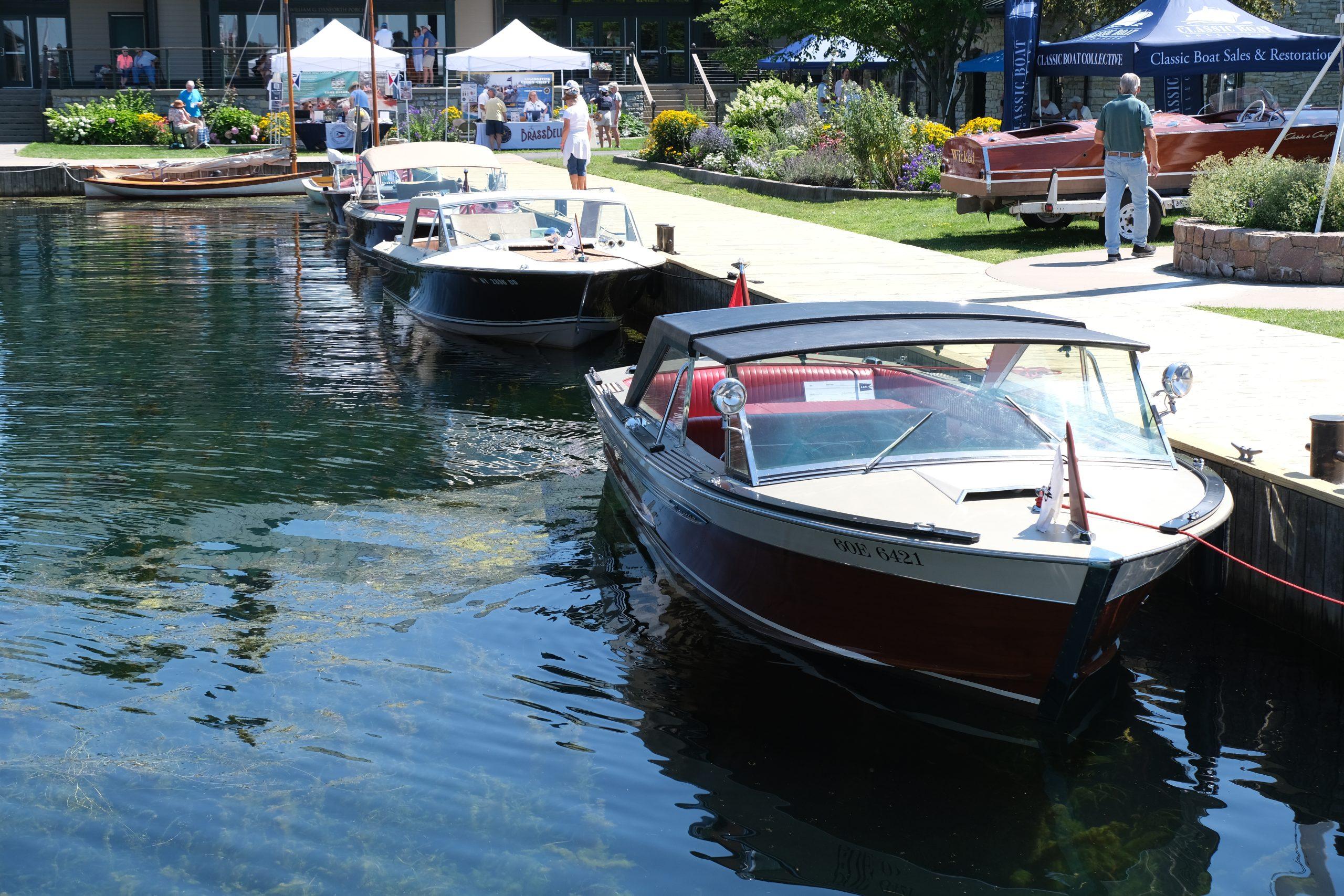
A Century of Century – 62nd Antique Boat Show Award Winners:
BEST OF SHOW AWARDS
- Antique Boat of the Year – Preserved (Power – Best of Show Preserved): Alice – Dan & Maureen Allen (1927 Gidley Boatworks)
- Antique Boat of the Year – Restored (Power – Best of Show Restored): Lady Gibraltar – Patrick Keefe (1932 Gidley Boatworks)
- Blair Cook Memorial Small Craft of the Year: North Wind – Karen Marsden (1887 Charles Estes)
MARQUE AWARDS
- Outstanding Chris Craft: Bumble Bee – Tom Pirro, Sr. (1976 Chris Craft)
- Outstanding Lyman: Dot Calm – Erick Heise (1955 Lyman)
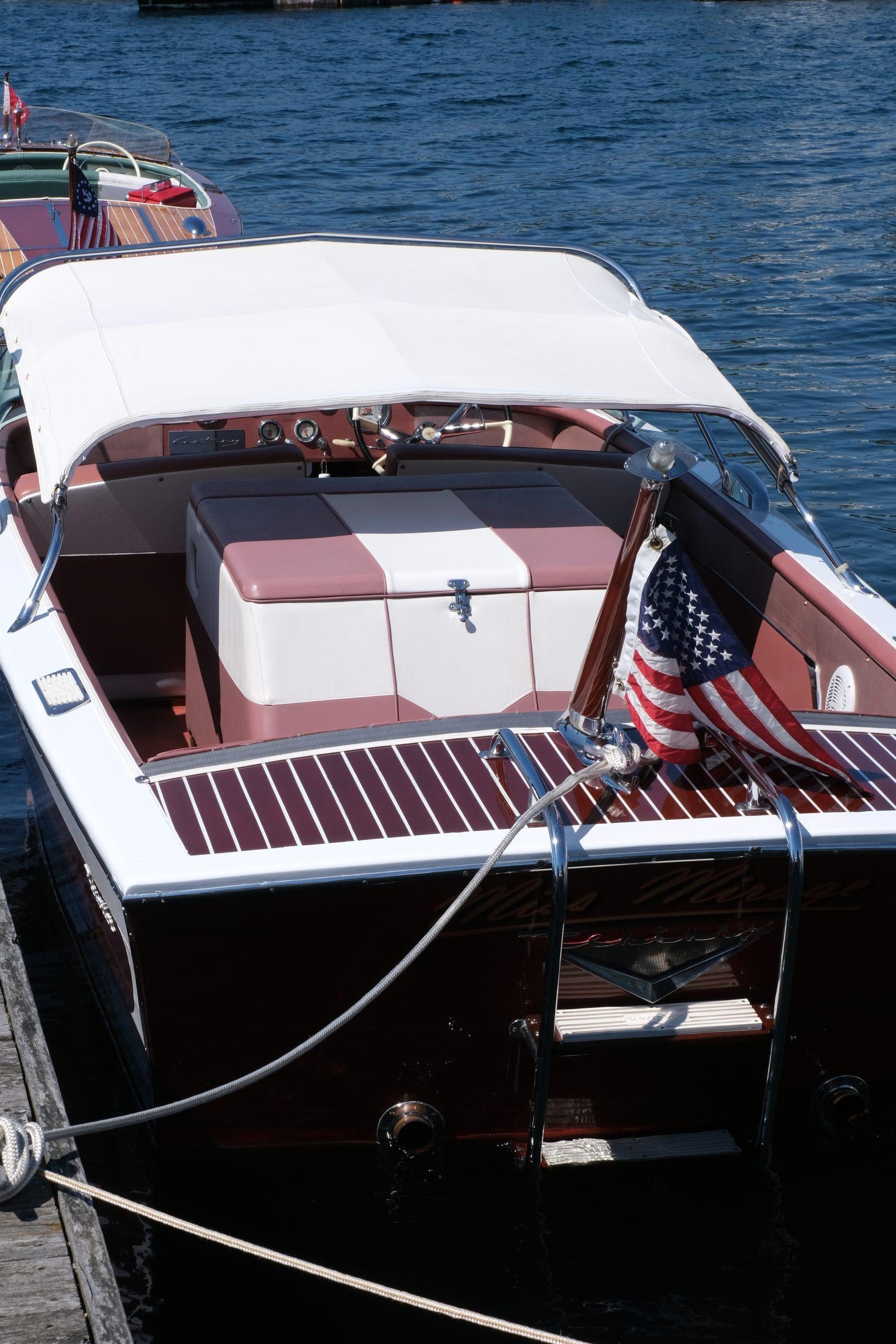
- Outstanding Century: My First Woody – Alex Brockway (1967 Century)
- Joe Turcotte Memorial Gar Wood Award: Perfect Pitch – Bob Fletcher (2022 Gar Wood Custom Boats)
SPECIALTY AWARDS
- Stewardship Award, Presented by the Chris Craft Antique Boat Club: Seasharp – Robert Breidert (1929 Chris Craft)
- Craftsmanship Award: Lola – Brian Olejarczyk (1950 Century)
- Allan R. & Elizabeth H. Youngs Memorial Award for Best Fit with the Show Theme: Timeless – Joseph McBride (1940 Century)
- John Clark Inboard Engine of the Year: Patrick Keefe – 1932 Buchanan Junior JR4
- Fred Thomas Antique Boater of the Year: Bob Fletcher – Perfect Pitch (2022 Gar Wood Custom Boats)
- ABM Staff Choice: HEMIFIED – Todd Rissberger (1955 Century)
- People’s Choice: Lady Margate – Anthony J. Antico, III (1947 Steelcraft)
- Walter G. Kincaid Memorial Award: Alice – Maureen & Dan Allen (1927 Gidley Boatworks)
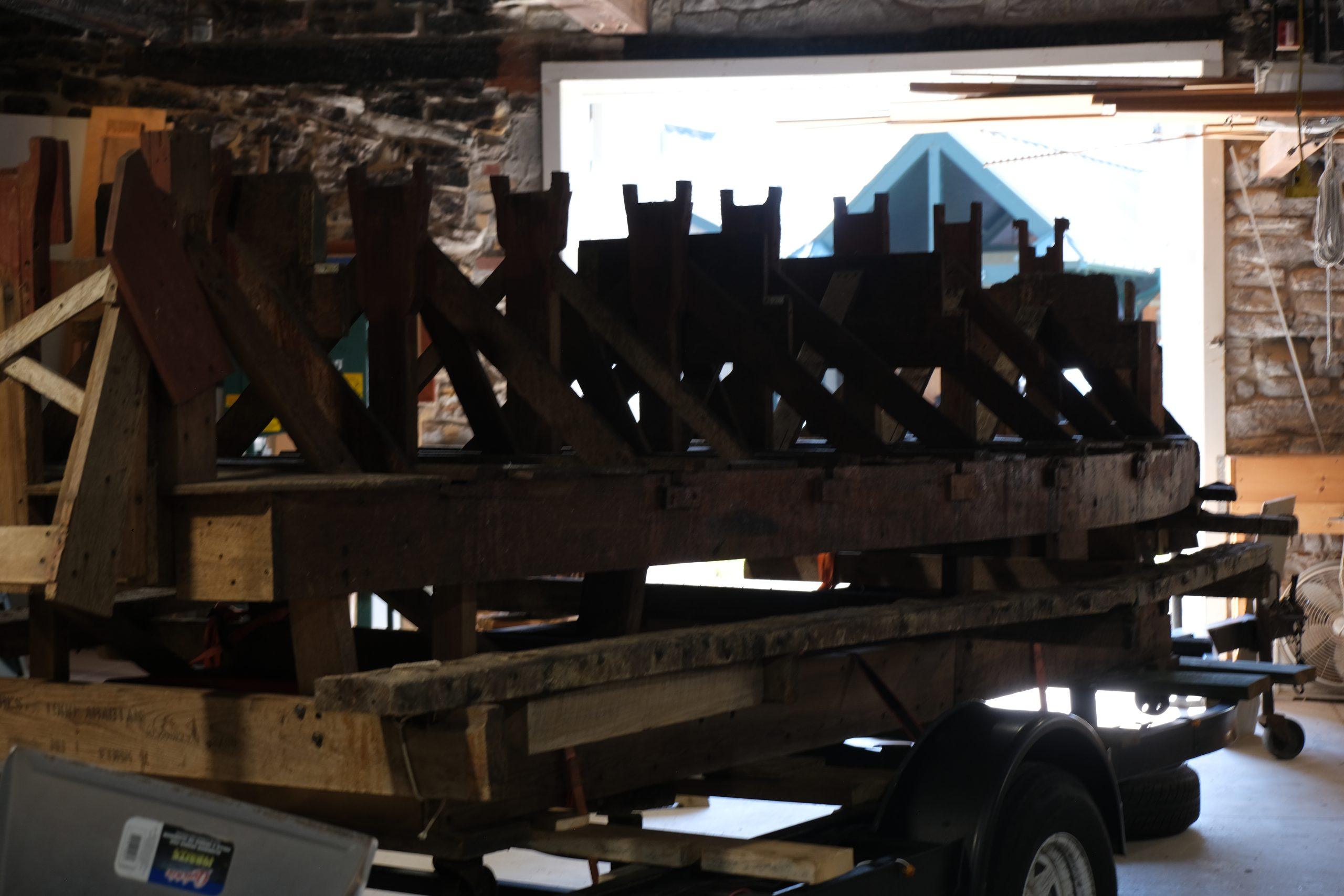
- Jim Lewis Memorial Award for Most Unique Vessel: Century Framing Jig – Trudi & Frank Miklos
- Robert O. Cox Founders Award: My First Woody – Alex Brockway (1967 Century)
- Walter J. Siegenthaler Memorial Award: Best Revenge – William Olmsted (1955 Chris Craft)
- Howard I. Chapelle Memorial Award: Sally Botelho (1942 Linkanoe)
- Syd Marsden Memorial Award: Syd Marsden
BOAT CATEGORY WINNERS
- Preserved Antique Paddling Canoe: Cookies – Richard & Wendy Fetridge (1920 Carleton/Old Town)
- Preserved Antique Row Boat: Sally Botelho (1942 Linkanoe)
- Preserved Antique Rowing Skiff: North Wind – Karen Marsden (1887 Charles Estes)
- Preserved Antique Outboard Boat: Jona – Rob Garrantano (1929 Keystone)
- Preserved Classic Outboard Boat: Missy 4 – Patrick & Mary Ann McCollum (1957 Chris Craft)
- Preserved Classic Outboard Racer: Lightning – Liam Smith (1959 Sid Craft)
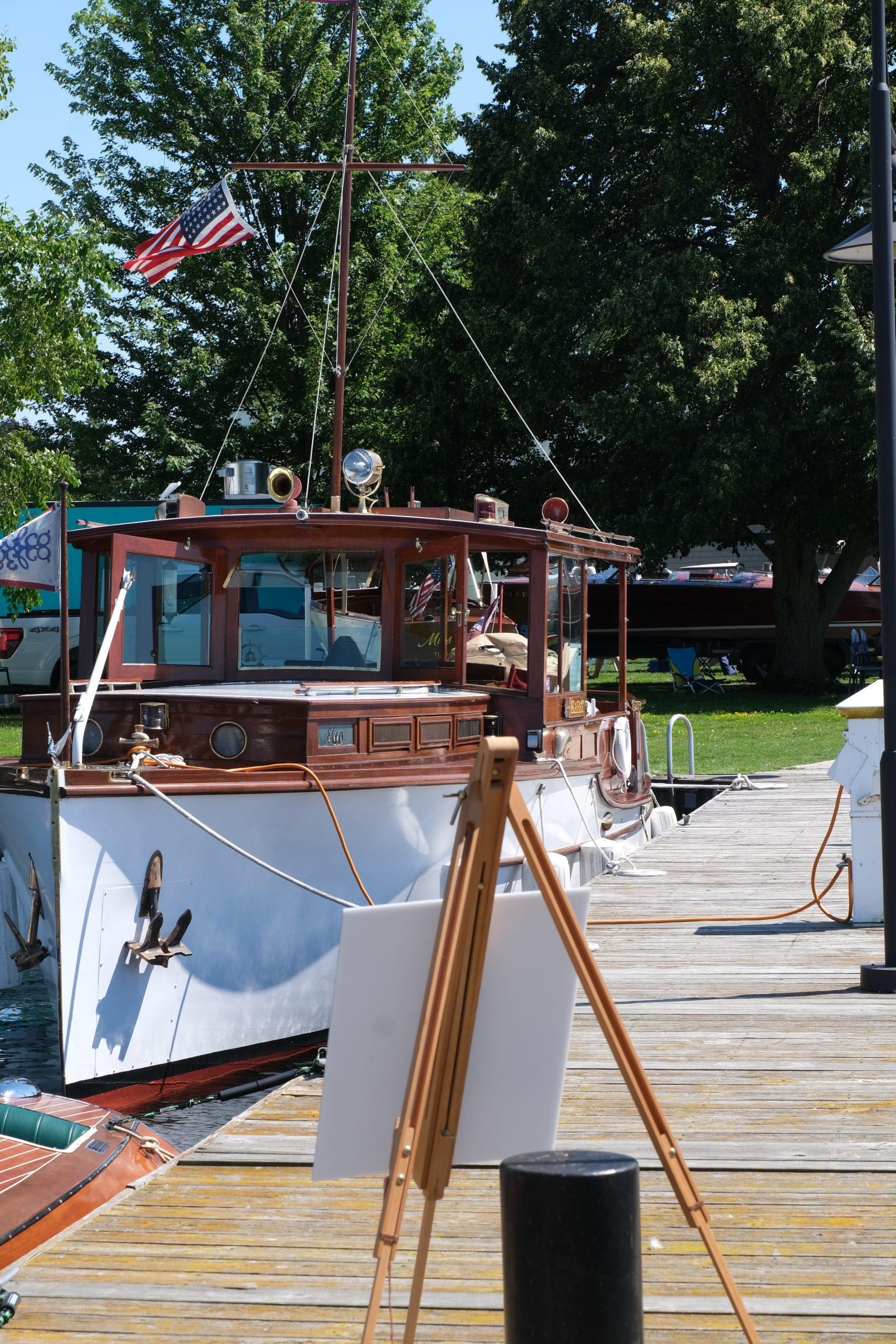
- Preserved Classic Cruiser: Lady Margate – Anthony J. Antico, III (1947 Steelcraft)
- Preserved Antique Utility: Remember Wenn – David Wenn (1937 Lyman)
- Preserved Classic Utility: Raccoon – Mark Krzyzanowski (1965 Century)
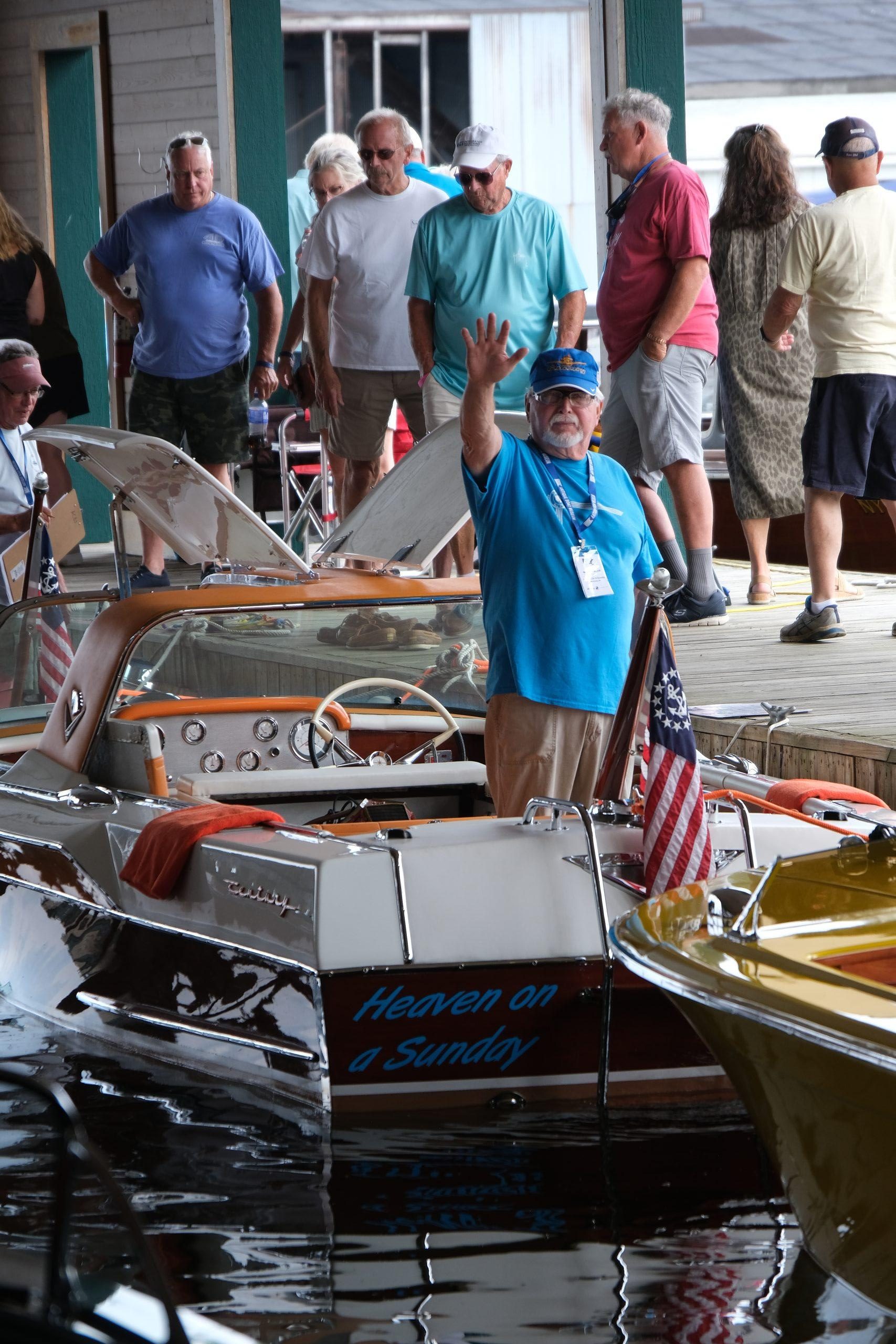
- Restored Classic Utility: Heaven On A Sunday – Ray McDowell (1963 Century)
- Restored Antique Runabout: Seasharp – Robert Breidert (1929 Chris Craft)
- Preserved Classic Runabout: Luv Lee – Dean Williamson (1955 Century)
- Restored Classic Runabout: Lola – Brian Olejarczyk (1950 Century)
- Preserved Antique Launch: Alice – Maureen & Dan Allen (1927 Gidley Boatworks)
- Best Contemporary Runabout: Just For You – Jack & Denise Rifenburg (2010 Gar Wood Custom Boats)
- Best Contemporary Racer: La Te Da – Jim Hendler (2005 Gar Wood Custom Boats)
- Best Non-Wood Inboard Boat: Love Shack – David Wesp (1968 Century)
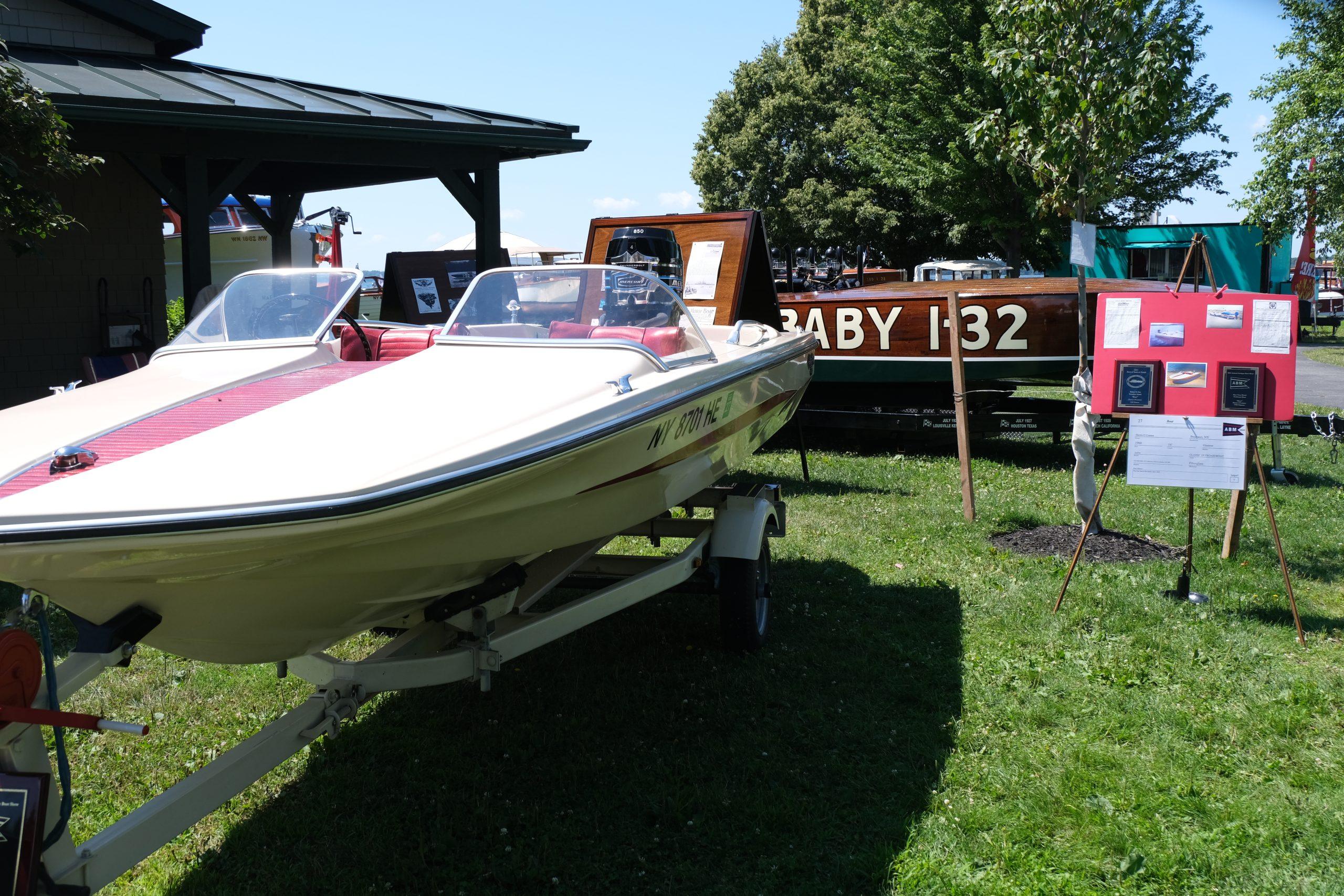
- Best Non-Wood Outboard Boat: Boat – Shawn O’Connor (1968 Glastron)
- Best Non-Wood Large Craft: Lady Margate – Anthony J. Antico, III (1947 Steelcraft)
- Best Non-Wood Sailboat with Auxiliary: Tatanka – Tom Trovato (1994 Freedom)
- Resto-Mod: Maeflower – Robert Gault (1964 Lyman)
MOTOR AWARDS
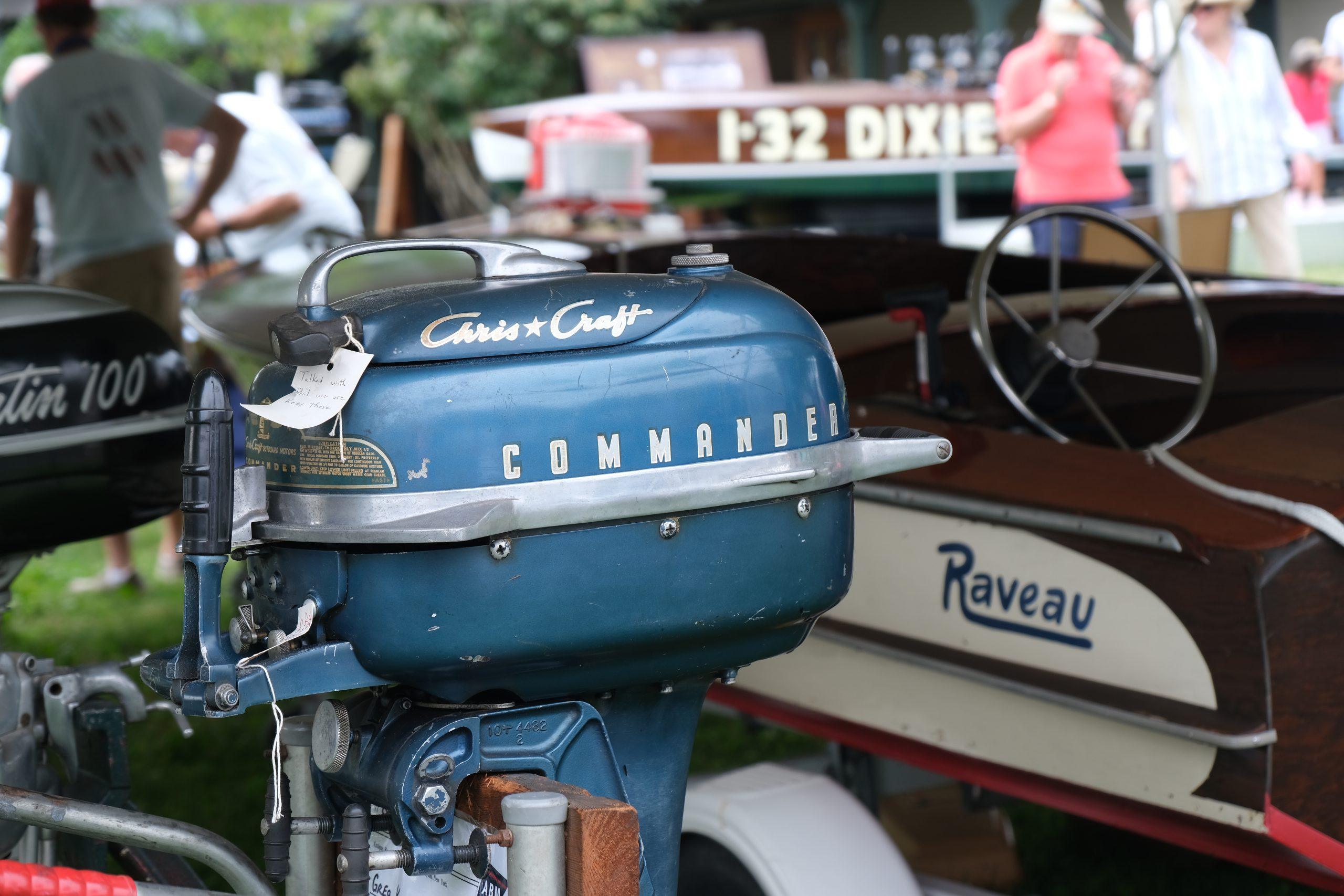
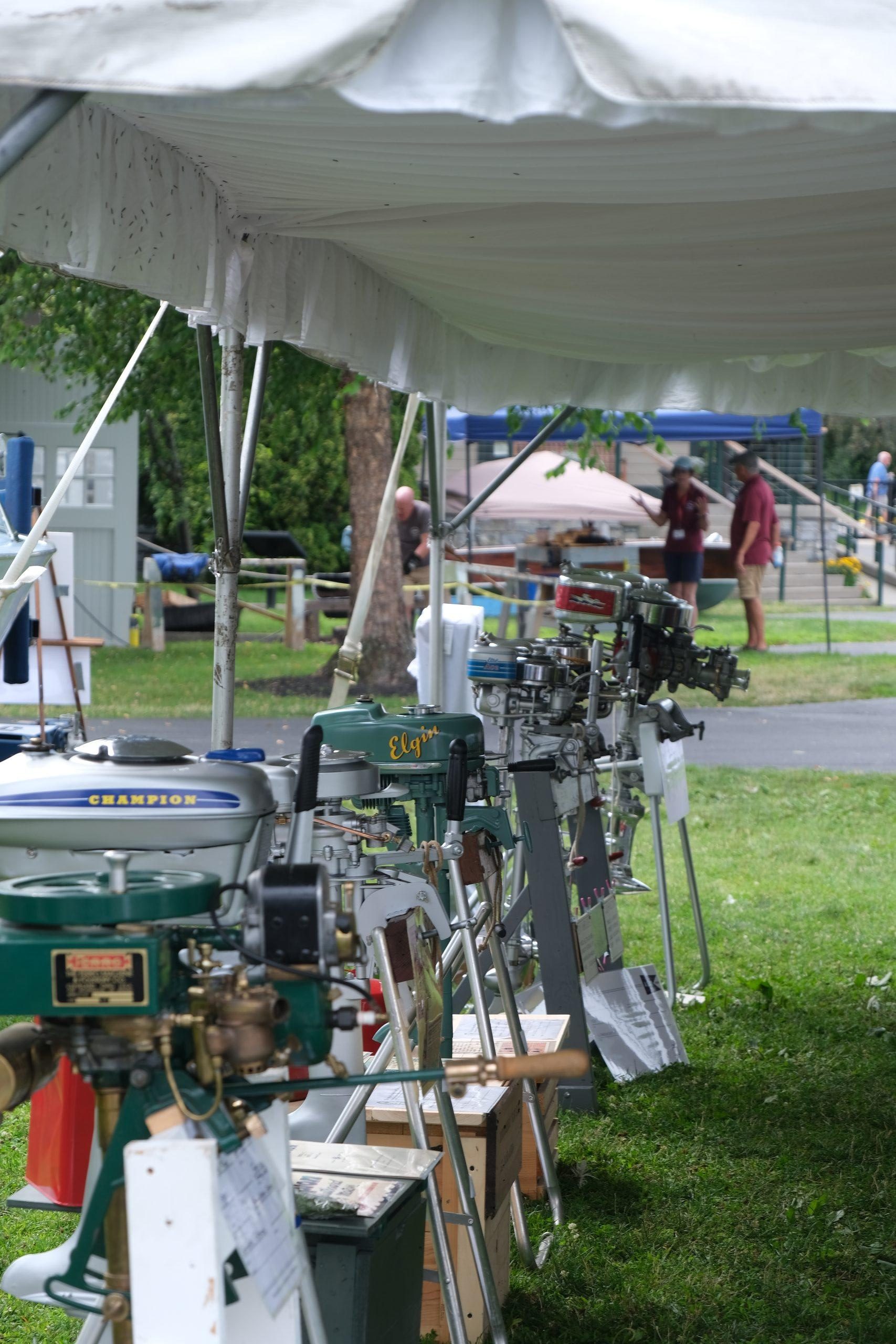
- Best Outboard Display: Greg Kranz
- Most Unusual Outboard: Jay Benton – 1966 Evinrude
- Outboard Motor Craftsmanship: Jeff Walshe – 1940 Sea King & 1946 Elgin
- Restored Antique Brass Outboard, Less Than 20 HP: Stephen Fox – 1917 Ferro
- Restored Antique Aluminum Outboard, Less Than 20 HP: Fran Secor – 1936 Elto
- Restored Classic Aluminum Outboard, Less Than 20 HP: Liam Smith – 1952 Mercury
- Unmounted Inboard: Stephen Fox – 1909 Waterman
Boat, Motor and Amphicar Registration
2027 Registration will open on March 1, 2027.
Marketplace Vendor Registration
2027 Registration will open on March 1, 2027
Auction
The 2027 Boat Show Auction will take place at 1 pm on Saturday, August 7, 2027.
Donate an Item for Auction
If you have a boat, engine, or other related boating object you are interested in donating for museum benefit, please contact Caitlin Playle, Curator and Collections Manager, at 315.686.4104 ext. 231 or caitlinplayle@abm.org.
Consigning an Item for Auction
If you have a boat, engine, or other related boating object you are interested in consigning to the 2027 auction, please contact Caitlin Playle, Curator and Collections Manager, at 315.686.4104 ext. 231 or caitlinplayle@abm.org.
Bidder Registration
Bidder registration information for the 2027 Auction will be available in July 2027.
TERMS OF SALE
Auction Rules & Terms of sale:
If pick up/delivery of a boat/item by a third party is required, it is the owner’s responsibility and expense to arrange that delivery and to notify ABM as to who will be picking up the boat/item and when.
No proxy bids (one person bidding on behalf of someone else), and no third-party payments allowed; only the owner can complete the registration/titling/payment.
No absentee bidding. At this time ABM does not have the staffing capacity or infrastructure to manage absentee bidding.
Each item for sale is sold AS-IS, WHERE-IS. All sales are final. NO REFUNDS. Items in this auction are from various consignors or ABM deaccessions and/or boats for sale. Some have been pre-used and may contain defects. We have made every attempt to describe each item as accurately as possible. We are not responsible for errors or omissions in the descriptions. Before bidding, you should take appropriate steps to verify the accuracy of the listed item descriptions. You should also take appropriate steps to inspect or validate the condition of listed items prior to bidding on them. We will answer questions to the best of our ability and provide additional information if available for an item upon request during the pre-bidding and preview period.
A 15% Buyer’s Premium is applied to all purchases. The buyer is responsible for sales tax in their own state or jurisdiction at the time of DMV registration. Payment must be made in U.S. dollars. Payment options include cash, check or credit card. All credit card payments will have a 3% surcharge added. Complete payment is required after the conclusion of the auction. The Museum reserves the right to hold items or titles to items until funds clear. All winning bidders must arrange to remove items from the auction location at time of payment.
Payment must be made at the conclusion of the auction. Items that are not paid for and picked up or shipped/hauled within 3 days after auction will be deemed abandoned and those lots will be offered to the underbidder(s). Third-party shipping/hauling is available; buyers are responsible for coordinating payment and delivery arrangements with the shipper/hauler.
Buyer waives any claims for liability against either ABM or the donor/consigner of the property, and neither ABM nor the donor/consigner is responsible for any personal injuries or damages to the property that may result from the utilization of the property sold.
Bidders who abandon lots may receive a “bad bidder” rating that may affect their ability to bid in future auctions.
Pick up/Shipping: Boats/items must be removed from ABM’s grounds ASAP starting Sunday, August 2nd or NO LATER THAN 5 PM MONDAY, AUGUST 3, 2026 unless special arrangements have been made with ABM. Vehicles are not permitted on campus for the removal of boats until 9 AM SUNDAY, AUGUST 2, 2026. Any necessary movement and securing of items is at the sole risk and responsibility of the owner. The owner must present the item’s Bill of Sale when the item is removed. Boats/items left at ABM after 5pm Monday, August 3rd, WILL BE MOVED AND STORED AT THE PURCHASER’S EXPENSE for a fee of $50 a day. If pick up/delivery of a boat/item by a third party is required, it is the owner’s responsibility and expense to arrange that delivery and to notify ABM as to who will be picking up the boat/item and when.
Parking, Shuttle, and Visitor Docking
Parking is available at Lions Field and the Guardino Elementary Parking Lot, and any available village street parking. We ask you to be considerate of our neighbors when parking on the street and not to block driveways and sidewalks. The ABM Community Parking Lot located at Riverside Dr and Jane St behind Watertown Savings Bank is open to current Friends of the Museum only from Thursday, August 1 through Sunday, August 4. Limited handicap parking is available in front of the Museum.
A FREE shuttle runs during Boat Show between ABM, Frink Park on Riverside Dr., the Lions Field parking lot (Webb St.), Guardino Elementary and the Don Doebler Collections Storage Facility (when open). The shuttle hours are 8:30 am-5:30 pm on Friday and Saturday and 8:30 am -1 pm on Sunday.
Visiting the Show by boat? Visitor docking is not available at ABM’s docks during the Show. Limited docking is available at the Clayton Harbor Municipal Marina and the Village Docks. Learn more about the Municipal Marina here and the Village docks here.
2026 Digital Program
Past Boat Show Digital Programs
2025 Digital Program
2024 Digital Program
2023 Digital Program
2022 Digital Program
2021 Digital Program
Click the cover image to view the program.
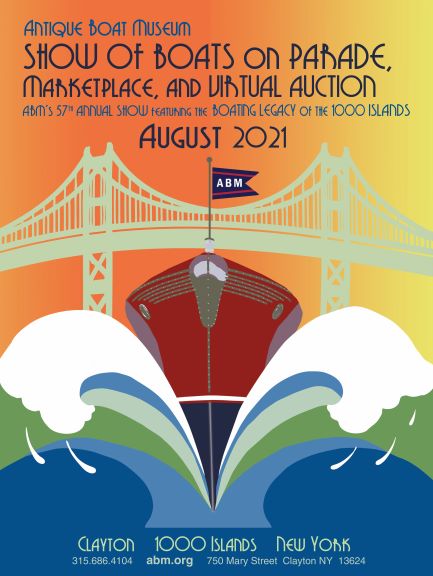
In 1926, two brothers from Michigan, James and William Welch, took a bold leap into the world of recreational boating. Together, they launched the Century Boat Company, a small shop with big ambitions along the shores of Lake Michigan. Their goal was simple and audacious: build boats that were fast, beautiful, and unforgettable.
One hundred years later, their legacy still thrills us and this summer the Antique Boat Museum is honored to celebrate the 100th anniversary of Century Boats at the 62nd Annual Antique Boat Show & Auction, July 31 – August 2, 2026.
James and William Welch brought complementary strengths to their new venture: James, an engineering mind fascinated by performance, and William, a savvy businessman focused on growth. Together, they built a brand defined by bold ideas and remarkable craftsmanship.
Their very first production model, the Century Kid, debuted shortly after the company’s founding. It was a 14-foot, plank-hulled runabout with seating for three, capable of reaching 35 mph – a thrilling speed for its day. It didn’t just make a splash; it signaled what Century intended to stand for: innovation, style, and performance.
As the company grew, the Welches doubled down on speed. In 1931, Century produced five hulls that went on to set a series of official world speed records, cementing their reputation as one of the fastest names on the water. “The Thoroughbred of Boats” wasn’t just marketing – it was fact.
Through the 1930s and 40s, Century’s designs evolved into sleek, mahogany showstoppers whose chrome accents and polished finishes came to define the golden age of American runabouts. Models like the Sea Maid, Thunderbolt, and Viking radiated sophistication, making Century a status symbol on rivers, lakes, and coastlines across the country.
When the United States entered World War II, Century shifted its entire production to support the war effort. The company built over 3,600 boats under government contract, supplying the U.S. Army and Navy with craft essential to patrol, transport, and training missions.
Their exceptional workmanship and efficiency earned Century the prestigious Army-Navy “E” Award for Excellence in Production, an honor reserved for manufacturers whose output directly strengthened the nation’s wartime capabilities. This period not only showcased the company’s technical skill—it revealed the character and capability behind the Century name.
The 1000 Islands region has always had an affinity for power and polish, making it no surprise that Century boats became summertime fixtures here. Their quick acceleration and reliable handling suited the winding channels of the St. Lawrence, while their gleaming finishes looked right at home tied up at island docks.
Today, Century owners across the region share similar stories: chasing wakes behind a Sea Maid, hearing the growl of an inboard echo off granite cliffs, or stepping onto varnished decks warm from the midday sun. These boats weren’t just recreational vessels; they were part of family traditions.
The story of Century is the story of American ingenuity—from a 14-foot Kid that delighted early customers, to speed records that turned heads worldwide, to wartime production that supported a nation in crisis. Through every chapter, the thread has remained the same: bold design, honest craftsmanship, and a love of the water that the Welch brothers infused into every plank and every hull.
Today, Century boats captivate collectors not only because they’re beautiful, but because they carry stories—of summers, families, speed, and the timeless joy of a wooden boat carving across open water.
Boat Show Video by Cal Lewellyn of Franklin Hill Media
Posters of Previous Boat Shows:
Many of our past posters are available for purchase in the Museum Store in-person or online here.